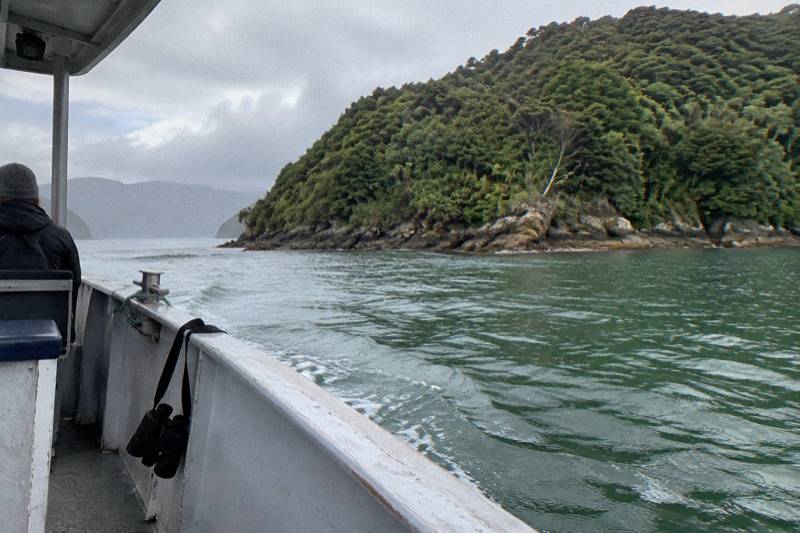
Picton Dolphin Cruise: When Sightings Are Likely And What To Book
Dolphins are the most asked-about wildlife in the Marlborough Sounds, and Picton has more small-boat options for finding them than almost anywhere else in New Zealand.
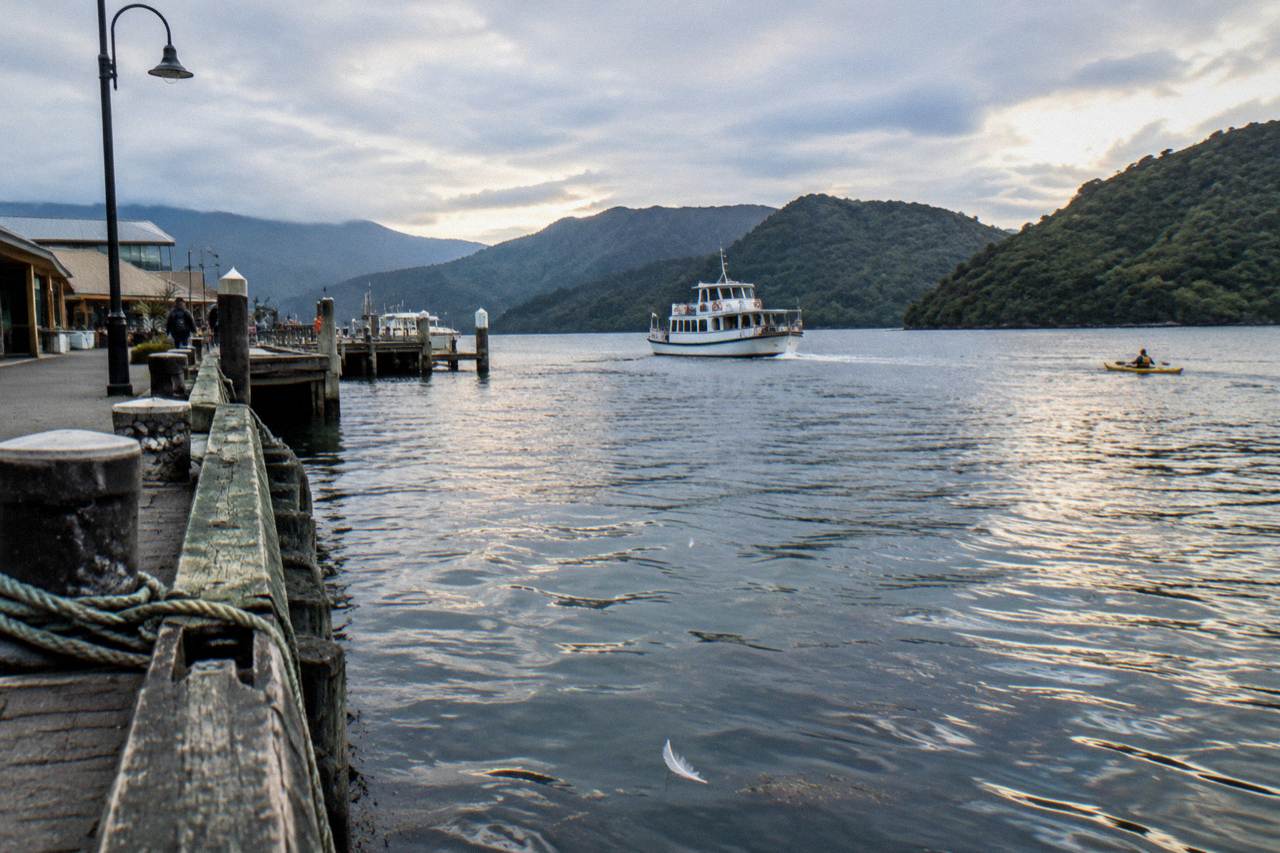
Dolphins draw more questions than any other animal in the Marlborough Sounds, and for good reason. This guide sets out what is actually known: which dolphins live in or visit the Sounds, which cruises from Picton go searching for them, what a swimming trip involves, and what each option costs. No cruise here can promise a sighting, and any page that does should be read with caution.
The Sounds are unusual in New Zealand for their mix of open-coast and enclosed-water habitat. Three dolphin species are documented in the Sounds: Hector's, dusky and bottlenose. Orcas are also reported. Dusky sightings peak in winter and spring, Hector's in summer and autumn. The result is a genuine chance of dolphins on almost any Picton cruise, not only the ones with dolphin in the title. Choosing between tours is mostly about group size, duration, whether you want to land somewhere, and whether you want to get in the water.
What Dolphins Can You See On A Picton Dolphin Cruise?
The Marlborough Sounds host five dolphin species: dusky, bottlenose, common and orca, plus the rare Hector's dolphin, according to Marlborough NZ's wildlife information. Duskies are the ones most regularly encountered on Picton cruises. Orcas come near shore from October to March. New Zealand fur seals gather around Kaipupu, and little blue penguins, shags and terns live in these waters. No operator guarantees any sighting, and honest ones say so plainly.
That species list comes from the regional tourism body rather than from tour marketing, which matters. Operators in the Sounds tend to use careful language, describing what they regularly come across rather than promising it. The Pelorus Mail Boat's own wildlife notes, for example, list little blue penguins, white-fronted terns, fluttering shearwaters and rare king shags as regulars, with fur seals, stingrays and dusky, common and bottlenose dolphins as may-see species, and orca as very occasional.
Orcas deserve a special mention because they are the species people most hope for and least often see. The October to March window reflects when they feed closer to shore, and the Sounds' deep, sheltered channels suit them. Sightings outside that window happen but are less frequent. If orca are your single reason for booking, plan a spring or summer trip, treat anything else as a bonus, and remember that a cruise with no dolphins at all still passes seals, seabirds and some of the most convoluted coastline in the country.
The other species worth knowing about before you book is the king shag. Fewer than 600 of these birds exist, and their stronghold is the Marlborough Sounds; keep at least 100 m from nesting and roosting sites if you pass a colony. Several wildlife cruises treat them as a headline sighting, and for a birder they can outshine the dolphins.
Which Picton Cruise Is Best For Dolphin Sightings?
For dolphin sightings, the Captain Cook and Dolphin Cruise combines history and dolphin watching, rated 4.7 across 28 reviews, while the swim-with-dolphins trip suits those who want to get in the water despite its lower 4.1 score from 40 reviews. All four Picton options, run by E-Ko Tours from 1 Wellington Street, carry at most 30 passengers, so the best pick comes down to landing, walking or swimming.
The Motuara Wildlife Sanctuary Tour and Dolphin Cruise is the most reviewed of the four and the most complete day out: 4.5 hours, from $100.08 per person, with a landing on Motuara Island included. Motuara sits opposite Ship Cove, about 32 km from Picton, and its birdlife is exceptional; dolphins are the bonus on the crossing rather than the sole purpose. National Park fees and drinks are included in the fare, and free cancellation applies up to 24 hours before departure. The Motuara Island tour guide covers the island itself in detail.
The Bird Watching and Dolphin Eco-Tour to Blumine Island runs 3 to 4 hours from $128.84 per person and swaps Motuara for Blumine, another predator-free island with its own restoration story. It suits birders who want a shorter day and a different island. The Captain Cook and Dolphin Cruise, 4 hours from $100.08, leans toward history and scenery with dolphins as they come. And the swimming trip, covered in its own section below, is the only one that puts you in the water.
Choosing among them is easier with the numbers side by side:
| Tour | Duration | Price per person | Rating and reviews | Max group | Landing |
|---|---|---|---|---|---|
| Motuara Wildlife Sanctuary Tour and Dolphin Cruise | 4.5 hours | from $100.08 | 4.7 across 216 reviews | 30 | Motuara Island |
| Bird Watching and Dolphin Eco-Tour to Blumine Island | 3 to 4 hours | from $128.84 | 4.8 across 56 reviews | 30 | Blumine Island |
| Captain Cook and Dolphin Cruise | 4 hours | from $100.08 | 4.7 across 28 reviews | 30 | None stated |
| Swim with Wild Dolphins: Small-Group Eco Tour | 2 to 4 hours | from $128.84 | 4.1 across 40 reviews | 30 | None stated |
A final note on the word best. None of these four is the best dolphin cruise in an absolute sense, because sightings vary and the four products serve different travellers. The most reviewed is the Motuara tour, and its 216 reviews give the most evidence to weigh. But a birder with a free morning may get more from Blumine, and a confident swimmer only has one real option.
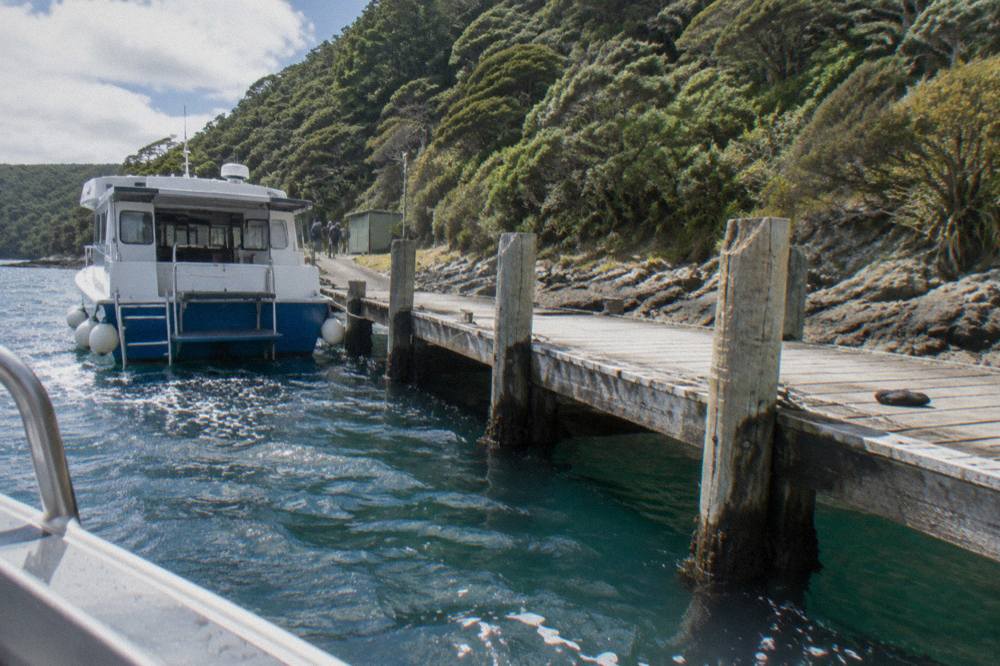
Can You Swim With Dolphins From Picton?
Yes, one tour does it: Swim with Wild Dolphins from Picton, a small-group eco trip of 2 to 4 hours from $128.84 per person, carrying at most 30 travellers. Swimmers must be 12 or older. It is the only cruise in this set without a 24-hour free-cancellation line; the operator describes a weather and minimum-numbers policy instead, so check the terms before booking.
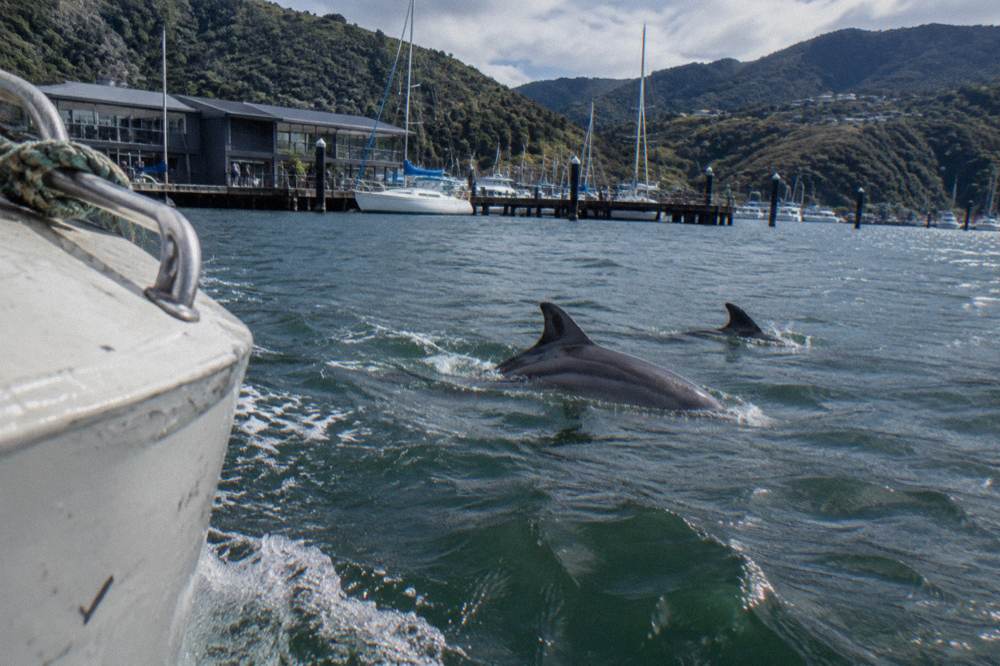
The swimming experience works differently from the tropical dolphin-swim trips some travellers picture. New Zealand dolphins are wild and untamed; the boat locates a pod, and if conditions and the dolphins' behaviour allow, swimmers enter the water while the animals choose whether to investigate. The tour provides wetsuits, mask and snorkel, and swimmers must be 12 or older. Some swims last minutes, some pods move on quickly. The 4.1 rating across 40 reviews reflects that variability more than it reflects the operator: a trip with no in-water time can still be a good wildlife cruise, but it is not the day a swimmer hoped for.
DOC rules shape the experience. Swimming with dolphins is legal, but not with pods that have very young calves, and boats must keep to idle speed within 300 m of any marine mammal. The marine mammal regulations set out the full framework, and responsible operators follow it closely; the trade-off is that encounters are calm, quiet and on the dolphins' terms. If you want guaranteed interaction, no New Zealand operator can offer it, and that is the point of the rules.
For travellers who would rather watch than swim, the Motuara wildlife tour remains the steadier choice: same operator, same small-group format, free cancellation up to 24 hours, and an island walk as the anchor of the day rather than an in-water gamble. Check availability alongside the swimming trip's dates and compare what each day actually contains. More background on the operator's approach sits in the Picton eco tours guide.
How Close Do Boats Get To Dolphins In The Marlborough Sounds?
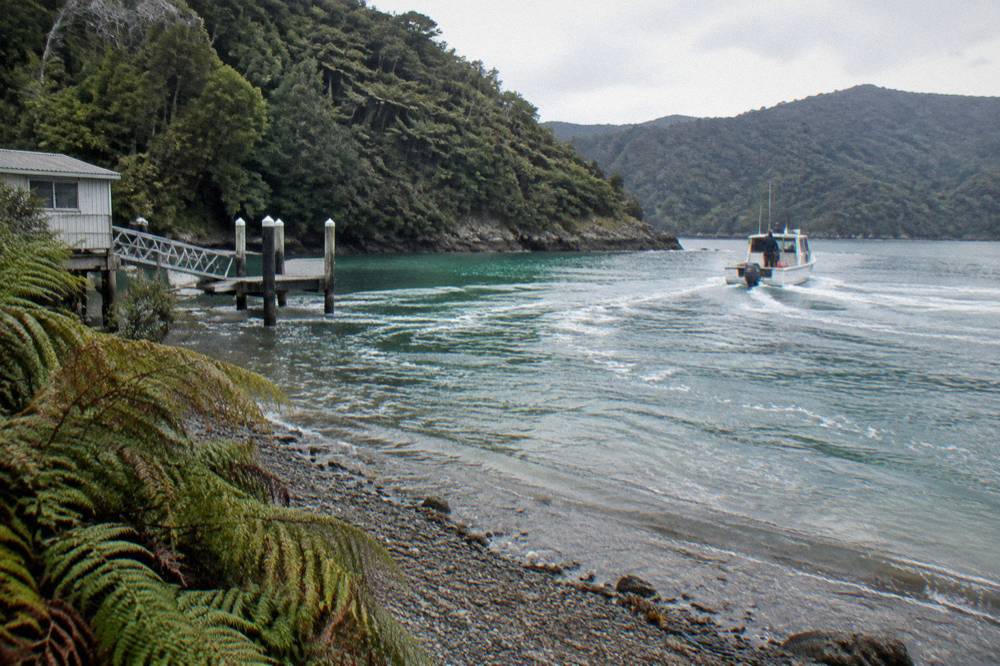
Department of Conservation rules require vessels to slow to idle or no-wake speed within 300 m of any marine mammal, to approach whales and dolphins from behind and to the side, and never to circle or cut through a group. Swimmers must stay out of pods with very young calves. Boats keep at least 50 m from whales and about 20 m from hauled-out seals. These are national rules, not operator choices.
The full framework comes from DOC's summary of the Marine Mammals Protection Regulations 1992, and it is worth reading before any wildlife trip in New Zealand because it explains why encounters feel the way they do. When a Picton cruise meets dolphins, DOC rules apply: skippers approach from behind or alongside, drop to idle or no-wake speed inside 300 metres, and never circle the pod or cut through it. Dusky dolphins are social and acrobatic, often seen in groups, and sightings in the Sounds tend to peak in winter and spring. That is a better spectacle than a chase, and it is the only legal way to do it.
For passengers the practical implications are simple. Bring a camera with a decent zoom rather than expecting to lean over a dolphin. Accept that the skipper may end an encounter if the pod includes calves or shows avoidance. And if seals are hauled out on rocks, expect the boat to keep a respectful 20 m clearance rather than nosing in for photos. Fur seals gather around Kaipupu, near Picton, so many cruises pass a colony on the way out.
One more rule worth knowing: vessels leaving a dolphin encounter must not exceed 10 knots within 300 m, and loud noises are off limits. Skippers who follow all of this are the ones worth booking with, and the established Picton operators do.
What Does A Motuara Island Dolphin Cruise Include?
The Motuara Wildlife Sanctuary Tour and Dolphin Cruise runs 4.5 hours from $100.08 per person, rated 4.7 across 216 reviews, with a maximum of 30 travellers. It includes a guide, on-board commentary, National Park fees, drinks and the Motuara Island landing. Hotel pickup is not included; the meeting point is E-Ko Tours, 1 Wellington Street, Picton. Free cancellation applies up to 24 hours before departure.
Motuara is the strongest island stop among Picton's dolphin cruises because of its history and its birds. Rats were eradicated in 1992, and since then South Island saddleback, robin and yellow-crowned parakeet have been returned to the island; DOC records about 200 saddleback there today, descended from 36 birds rescued in 1964. There is a lookout at the top of the walking track. In 1770 Captain Cook proclaimed British sovereignty over the South Island on Motuara, an odd piece of history to stand inside on a half-day trip. DOC's page on the Motuara Island Scenic Reserve covers the reserve's rules, including its no-dogs policy and the check, clean and seal biosecurity request for all visiting gear.
Biosecurity is the one thing first-time visitors routinely miss. Because the island is predator-free, DOC asks that packs, footwear and clothing be free of soil and seeds before landing, with food in sealed containers.
The dolphin element of the day happens on the crossings. Queen Charlotte Sound between Picton and Motuara is regular dolphin habitat, and the skipper keeps watch both ways. Sighting rates are not published by any operator, which is itself a signal: the honest operators sell the island, the scenery and the chance of dolphins, in that order. The regional tourism body's Motuara Island bird sanctuary page describes cruises departing Picton daily, about an hour by boat each way.
The Blumine Island alternative keeps the same formula, an eco-cruise plus a predator-free island, on a shorter day. The Blumine Island eco-tour mixes bird watching with dolphin spotting over 3 to 4 hours, a wildlife-heavy alternative to the Motuara sanctuary trips. Motuara's birdlist is the deeper draw on the E-Ko tours, while Blumine leans quieter and wilder; both sit in dolphin country, so keep eyes on the water between stops.
What Time Of Year Are Dolphin Sightings Most Likely From Picton?
No month guarantees dolphins in the Marlborough Sounds. The clearest seasonal signal is for orca, which come near shore from October to March. Hector's dolphins peak in Queen Charlotte Sound over summer and autumn, while dusky dolphins are seen more often in winter and spring, so the season shapes which species you are likeliest to meet. Summer offers more departures and warmer decks; winter offers fewer boats and calmer mornings.
That last point surprises people. The Sounds' rainfall peaks in July, at 207 mm for the month against 65 mm in February at the Picton station, but rain in the Sounds often falls as showers between settled spells, and the sheltered inner bays flatten quickly. One operator's FAQ states that autumn and winter conditions can be some of the best of the year, with glassy calm water and more marine life including dolphins.
The monthly rainfall pattern at the Picton station, from NIWA's 1981 to 2010 climate normals, shows how the year actually shapes up:
| Month | Rainfall (mm) | Wet days of 1 mm or more |
|---|---|---|
| January | 87 | 6 |
| February | 65 | 4 |
| March | 101 | 7 |
| April | 104 | 7 |
| May | 112 | 8 |
| June | 145 | 10 |
| July | 207 | 14 |
| August | 151 | 10 |
| September | 121 | 8 |
| October | 140 | 10 |
| November | 133 | 9 |
| December | 98 | 7 |
The practical planning advice is to separate weather from wildlife. Book the season that suits your schedule and your seasickness tolerance, take advice from the seasickness on a Marlborough Sounds cruise guide, and treat dolphins as possible on every trip. Summer's advantages are real: longer daylight, less need for warm layers, and fuller timetables, with daily departures on some operator schedules.
How Much Does A Picton Dolphin Cruise Cost?
The four dedicated dolphin-watching tours cost from $100.08 to $128.84 per person for 2 to 4.5 hours. Budget alternatives without dolphin in the name still sail dolphin water: the half-day Marlborough Sounds cruise is from $69.02 per person (4.3 across 156 reviews) and the shore-excursion sounds cruise is from $59.00 (4.5 across 71 reviews). The Kaipupu water taxi at $24.73 has one review and is not comparable.
Here is the fuller price picture for cruises that regularly pass through dolphin habitat:
| Cruise | Duration | From, per person | Rating | Reviews |
|---|---|---|---|---|
| Swim with Wild Dolphins: Small-Group Eco Tour | 2 to 4 hours | $128.84 | 4.1 | 40 |
| Bird Watching and Dolphin Eco-Tour to Blumine Island | 3 to 4 hours | $128.84 | 4.8 | 56 |
| Motuara Wildlife Sanctuary Tour and Dolphin Cruise | 4.5 hours | $100.08 | 4.7 | 216 |
| Captain Cook and Dolphin Cruise | 4 hours | $100.08 | 4.7 | 28 |
| Half-Day Cruise in Marlborough Sounds from Picton | 3.5 hours | $69.02 | 4.3 | 156 |
| Picton Shore Excursion: Queen Charlotte Sounds Cruise | 2 hours | $59.00 | 4.5 | 71 |
Two cautions on that table. First, the lowest prices are not wildlife products: the 2-hour shore excursion is a scenic loop, and the Kaipupu water taxi is a short transfer, so neither belongs in a dolphin comparison despite sailing the same water. Second, the highest per-person from-price among well-reviewed tours is $128.84, which buys either the Blumine eco-tour or the swimming trip; those two share a price but not a product, and the swimming trip carries the stricter cancellation terms described earlier.
What Should You Bring And Know Before A Dolphin Cruise From Picton?
Bring layers and a waterproof jacket, sun protection, a sealed lunch or snacks where the tour excludes food, a refillable water bottle, and binoculars if you own them. All four dolphin tours depart from 1 Wellington Street, a short walk from the Picton waterfront. Hotel pickup is not mentioned; check the booking page. Swimmers need a towel and swimwear; Motuara visitors need clean gear for biosecurity.
Every Picton operator works from the same compact waterfront, which makes logistics easy. E-Ko Tours sits at 1 Wellington Street, with a blue line marking the route from the Visitor Information Centre; Beachcomber Cruises is at the corner of Wellington Street and London Quay.
Food needs planning. The dedicated dolphin tours do not include a meal; drinks are included on the Motuara tour, and the swimming trip lists hot and cold drinks, but lunch is your own. Picton has cafes and a supermarket near the waterfront, so buying a packed lunch on the morning works. The Keep Cup note on Beachcomber cruises is a small example of the pattern: tea and coffee hardware costs $6 NZ on board, listed as an exclusion rather than an inclusion.
What is and is not in the fare, tour by tour:
| Tour | Guide | Drinks | Food | Free cancellation | Hotel pickup |
|---|---|---|---|---|---|
| Motuara Wildlife Sanctuary Tour and Dolphin Cruise | Included | Included | Not included | Yes, 24 hours | Not included |
| Bird Watching and Dolphin Eco-Tour to Blumine Island | Included | Not stated | Not stated | Yes, 24 hours | Not stated |
| Captain Cook and Dolphin Cruise | Included | Not stated | Not stated | Yes, 24 hours | Not stated |
| Swim with Wild Dolphins: Small-Group Eco Tour | Not stated | Included | Not stated | Weather and minimum-number policy only | Not included |
Weather calls happen. The swimming trip and the Motuara tour may be cancelled for weather or insufficient numbers, and the operators say so plainly; when that happens, the free-cancellation tours rebook or refund while the swimming trip follows its own weather policy. Build a spare morning into your itinerary if dolphins are the trip's highlight. The what to wear on a Marlborough Sounds cruise guide has the full packing breakdown.
What Other Wildlife Comes With The Day?
A Picton dolphin cruise reliably delivers seabirds: little blue penguins, fluttering shearwaters, spotted and pied shags, white-fronted terns and, for lucky boats, the rare king shag, of which perhaps 500 to 600 remain. Fur seals gather around Kaipupu near Picton. On island-landing tours, saddleback, robin, kakariki, bellbird, tui and kereru are the main draws. Stingrays may be seen in the shallows.
The birdlife is not a consolation prize. The Sounds' marine mammals draw most of the attention: Hector's, dusky and bottlenose dolphins are all documented in Queen Charlotte Sound, and tour crews also report orca sightings from time to time. A birder on the Blumine eco-tour may end the day rating the shags above whatever dolphins passed by. The Marlborough Sounds wildlife cruise guide goes deeper on the non-dolphin species and which tours find them.
Marine life below the surface stays mostly out of sight, but stingrays may be seen in shallow bays, and the mussel farms that pattern the Pelorus side of the region are easy to pick out from the water. If your interest runs to the whole ecosystem rather than dolphins alone, the island-landing tours give you the broadest sample in a single half-day: open water, deep channels, jetty shallows and protected forest.
For the complete picture of the region's boats, including the mail runs and seafood cruises that share this water, the Picton boat tours overview on Picton Mail Boat Cruises lists every category side by side.
Choosing a dolphin cruise from Picton comes down to three honest questions. Do you want to land somewhere (Motuara or Blumine), do you want to swim (one tour, strict terms), or do you want the shortest and cheapest day on dolphin water (the half-day scenic cruise)? Answer those and the shortlist writes itself. Whatever you pick, the dolphins remain what they have always been in the Sounds: reported often enough to keep skippers scanning the water, and wild enough that no cruise can promise a sighting.
Common Questions About Picton Dolphin Cruises
What Dolphins Can You See On A Picton Dolphin Cruise?
Dusky, bottlenose, common and orca, plus the rare Hector's dolphin, are the five species recorded in the Marlborough Sounds. Duskies are encountered most often, and orca come near shore mainly from October to March. No sighting is guaranteed on any cruise.
Can You Swim With Dolphins From Picton?
Yes. One small-group eco tour offers swimming with wild dolphins, from $128.84 per person for 2 to 4 hours, with a minimum swimmer age of 12. It is the only cruise of this set without a 24-hour free-cancellation line; its terms cover weather and minimum numbers instead.
How Much Does A Picton Dolphin Cruise Cost?
Dedicated dolphin tours run from $100.08 to $128.84 per person for 2 to 4.5 hours. Scenic cruises that sail the same dolphin water start at $59.00 to $69.02 per person, though they do not focus on finding dolphins.
When Is The Best Time Of Year For Dolphins In The Marlborough Sounds?
Dolphins are present year round. The clearest seasonal pattern is orca near shore from October to March. Operators also report that autumn and winter can bring calm, glassy water and more marine life, alongside fewer boats on the water.
Do Dolphin Cruises From Picton Include Food?
Generally no. The dolphin tours do not include a meal; drinks are included on the Motuara tour and the swimming trip. Bring a packed lunch, and Picton's waterfront cafes and supermarket can supply one on the morning of departure.
How Close Do The Boats Get To The Dolphins?
Department of Conservation rules require boats to slow to idle within 300 m of any marine mammal and to approach from behind and to the side without circling. Encounters are calm and slow, and curious dolphins often close the distance themselves.