What Is The Best Time Of Year To Kayak In NZ?
The honest answer on kayak seasons in New Zealand, anchored on Picton and the Marlborough Sounds: what rainfall and wind data actually show, and how a guided paddle pairs with an afternoon boat cruise.
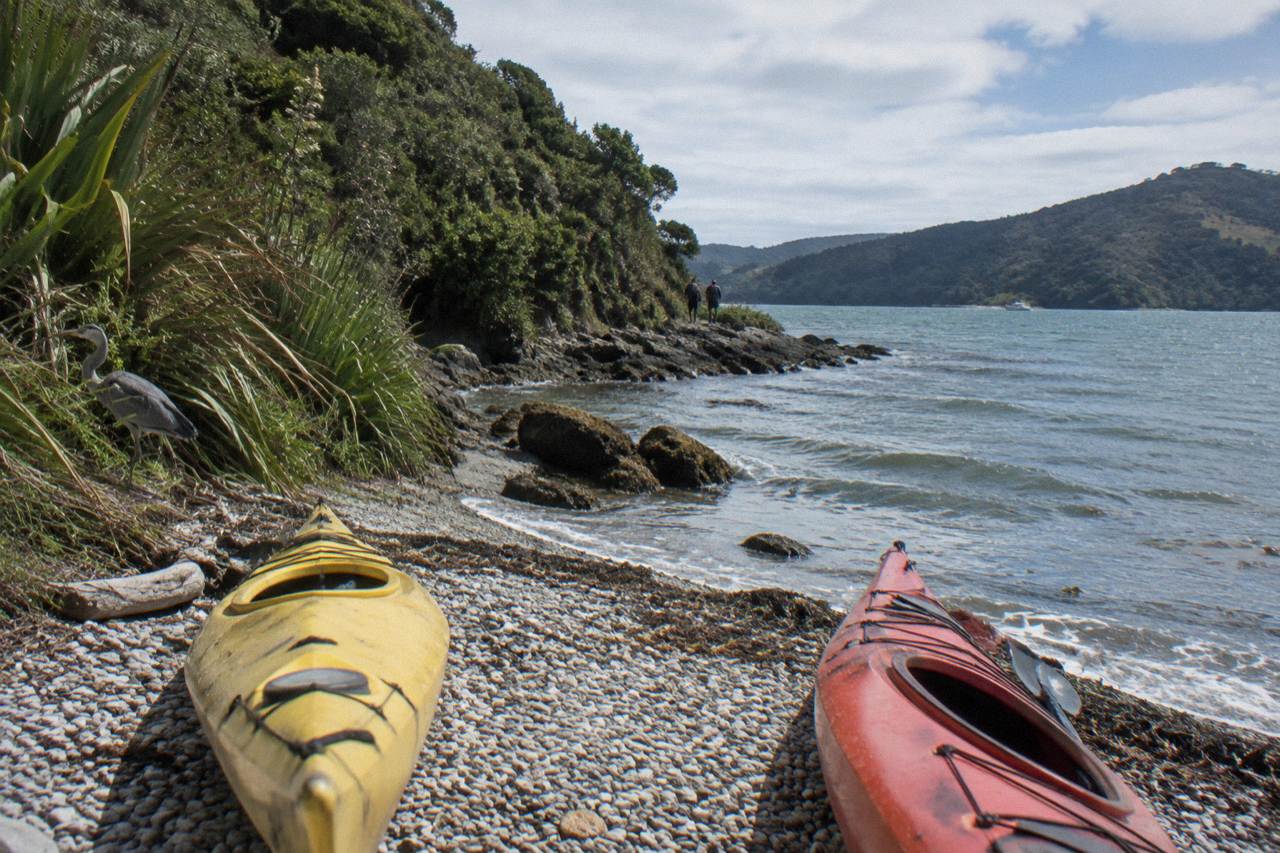
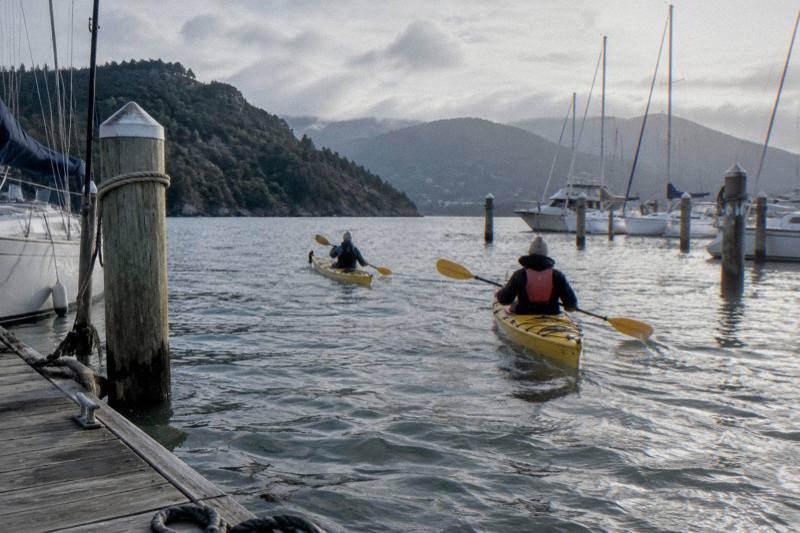
The short and honest answer is that it depends: on where in New Zealand you paddle, on whether you want warm air or glassy water, and on how much rain your chosen region gets in the month you travel. The verified rainfall record for Picton, the main gateway to the Marlborough Sounds, shows February as its driest month at 65 mm and July as its wettest at 207 mm, which makes late summer the strongest single window on paper for a Sounds paddle. Operators in the region also describe autumn and winter as sometimes producing the calmest water of the year, so the best time is less a fixed month than a trade-off you choose knowingly.
That answer frustrates people who want a single month named, so this article works through the question properly. It uses the measured climate record for Picton rather than folklore, looks at what wind does to the outer Sounds, and explains the one guided kayak product that departs from Picton itself, the Picton morning guided kayak and afternoon cruise, an 8 hour day from $152.43 per person run by Wilderness Guides from the Picton waterfront. If you're weighing a day that mixes paddling with time on a boat, the guide to Marlborough Sounds kayak and cruise combos lays out what each option covers and how to choose between them.
How Does Picton's Rainfall Shape The Kayak Season?
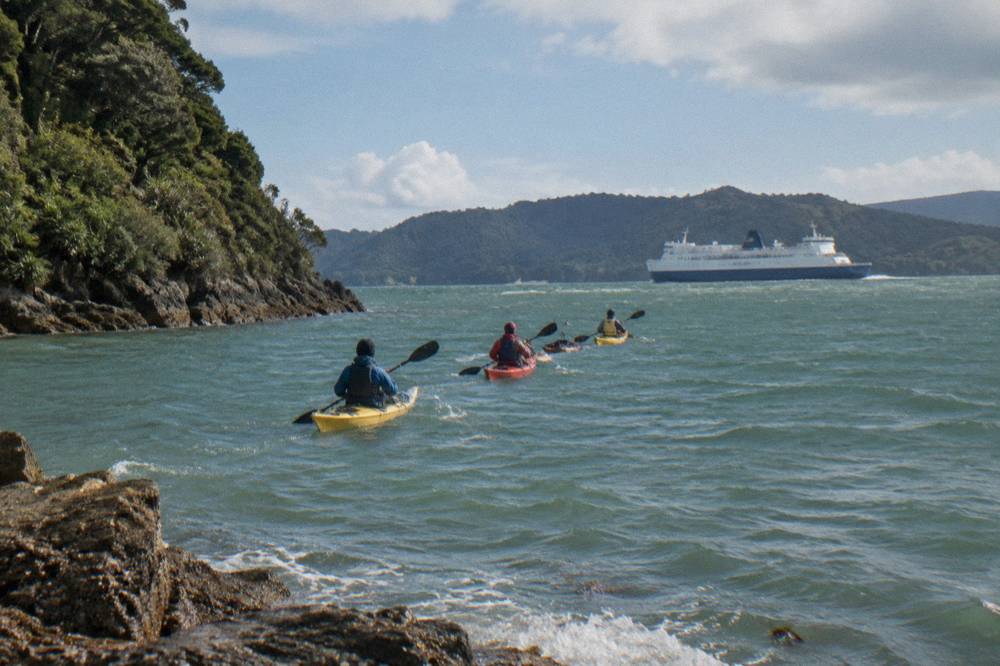
Rainfall is the one kayak-season variable that is actually measured, and for Picton the record is clear: February averages just 65 mm of rain across about 4 wet days, while July averages 207 mm across 14, a threefold difference that no amount of optimism cancels out. The same station, Picton 4, records 1,463 mm across a typical year, with winter taking roughly a third of it. Drier, calmer months cluster from January through March. Those figures come from NIWA's Marlborough climatology summary, which averages the 1981 to 2010 period and is the most solid basis available for timing a paddle in the Sounds (NIWA Marlborough Climatology).
Read the monthly numbers as a shape rather than a forecast. Picton's rainfall climbs gently through spring, peaks sharply in July, then falls away through August and September to the February low. Wet days, meaning days with at least 1 mm of rain, tell a similar story: 4 in February against 14 in July. For a kayak, that distinction matters because a wet day in the Sounds is rarely a write-off, it is often a morning of drizzle followed by a clear afternoon, whereas a month with 14 wet days simply gives you fewer lottery tickets.
| Month | Average rain (mm) | Wet days (1 mm or more) |
|---|---|---|
| January | 87 | 6 |
| February | 65 | 4 |
| March | 101 | 7 |
| April | 104 | 7 |
| May | 112 | 8 |
| June | 145 | 10 |
| July | 207 | 14 |
| August | 151 | 10 |
| September | 121 | 8 |
| October | 140 | 10 |
| November | 133 | 9 |
| December | 98 | 7 |
One caution belongs here. The numbers above describe rain at the Picton station, and the Marlborough Sounds are not one uniform body of water. NIWA's summary puts annual rainfall across the wider Sounds at roughly 1,600 to 1,800 mm, with Havelock at 1,733 mm and Pelorus Sound's Crail Bay at 1,747 mm, both wetter than Picton itself. The inner bays near Picton sit in a comparatively sheltered corner, a plus for paddlers; the seasons the guided paddle runs in are not mentioned, so check the live booking page.
The counterintuitive part, and the reason no honest article will tell you to avoid winter outright, is that rain and paddling quality are not the same thing. The Pelorus Mail Boat's own FAQ notes that autumn and winter in the Sounds can bring some of the best conditions of the year, with glassy calm water and more marine life. That is an operator's observation, not a promise, and it comes with colder air and shorter days attached. A February paddle is the safe statistical bet; a June paddle is a bet on still air winning out over rain.
What Is The Guided Kayak And Cruise Combo Like From Picton?
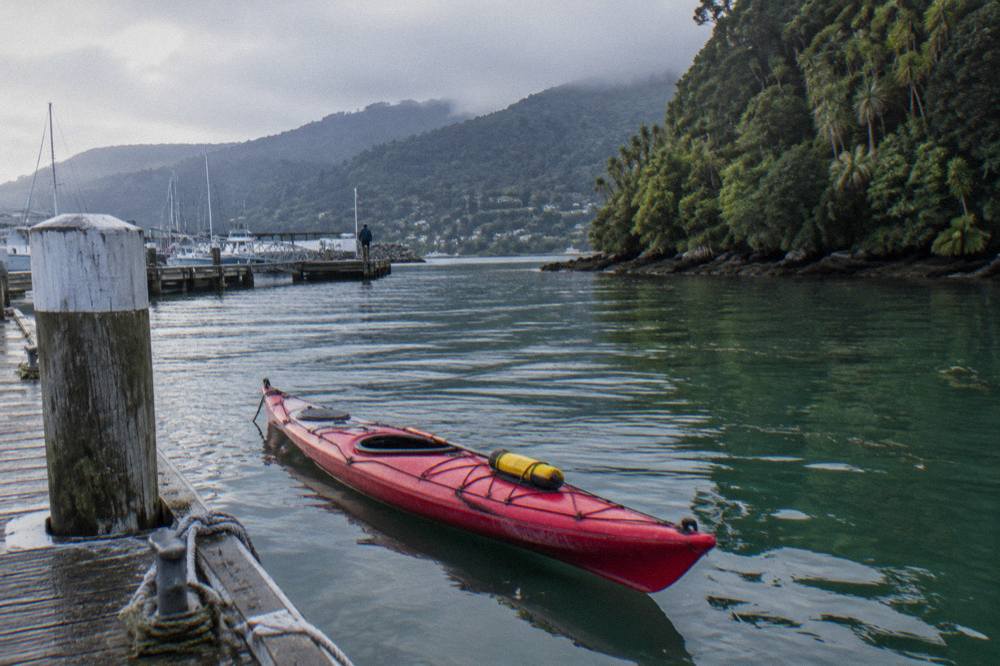
The one kayak product on this site's pages that departs from Picton is an 8 hour guided day from Wilderness Guides, from $152.43 per person, that pairs a morning paddle with an afternoon boat cruise and includes a guide, on-board commentary and a food tasting. Group size is not mentioned, so check the booking page. It lists free cancellation up to 24 hours before. As a new listing it carries no reviews yet, so there is no rating to report. The meeting point is the Picton waterfront at the corner of London Quay and Wellington Street, close to where most of the town's cruise boats tie up.
The structure of that day answers a question many travellers do not think to ask: a morning paddle and an afternoon cruise are not competing plans, they are the same plan in two halves. The still air of early morning suits a kayak, since the Sounds are often calmest before the afternoon breeze builds, while the boat covers the distance your arms cannot. It also hedges the weather: if the wind rises after lunch, you are on a motor vessel with a deck rather than a metre above the waterline.
“Such a phenomenal tour! Both Andy and Bella were very knowledgeable and pointed out a number of different species. We managed to see two kinds of dolphins, a fur seal, little penguins and lots of bird life. The tour was very well paced and incredibly enjoyable - would highly recommend!”
Because the day is guided, it removes the two things that go wrong most often for first-time paddlers in New Zealand: choosing a route beyond their ability, and misreading the wind. A guide also matters for the wildlife rules. Under the Department of Conservation's marine mammal regulations, vessels and kayaks must slow to idle within 300 m of any marine mammal and keep at least 50 m from whales, and swimmers and paddlers must avoid dolphin pods with very young calves (DOC marine mammal rules summary). Dolphins, orca and fur seals may all be seen in the Sounds, and a guide who knows the rules keeps a good encounter good.
A season is not stated. It runs as a scheduled day tour, and the practical question for timing is simply which dates have spaces, which the operator's booking page shows. As with anything weather dependent on the water, a small number of departures can be cancelled for conditions, and free cancellation up to 24 hours before gives you an exit if the forecast turns two days out.
What Does Wind Do To A Sounds Paddle?
Wind, not rain, is the factor that actually stops kayaking in the Marlborough Sounds: NIWA records that strong winds in the region peak in spring and summer, that the outer Sounds are exposed to Cook Strait gales while the inner bays near Picton are sheltered, and that gusts of 63 km/h or more hit Brothers Island on 243 days a year. Rain makes a paddle damp; wind makes it unsafe. For a paddler, the practical reading is to stay in the sheltered inner water in the breezier months and treat the exposed outer passages as summer-only ambitions. For anyone planning around those same gusts, the month by month Picton wind and rain guide pinpoints when the Sounds are at their calmest for a day on the water.
The geography explains the pattern. The Sounds are sheltered from open-ocean swell, and the further you travel from Picton toward the Cook Strait entrance at Tory Channel, the more exposed the water becomes, with winds funnelling sharply down valleys and gullies. Blenheim, in the sheltered Wairau Valley, is one of the sunniest towns in New Zealand, but sun and calm water are different assets. A paddler wants the second.
This is where the season question stops being about months and becomes about location. In February, the statistically driest month, an experienced paddler might happily cover open water between bays. In October, one of the windier months on the record, the same paddler would be wiser in the enclosed corners near Picton, such as the water toward Kaipupu Point, where the shoreline breaks the fetch. Guided operations account for this by choosing routes on the day rather than committing in advance, which is precisely what a first-time visitor cannot do alone.
The wind record also explains why locals shrug at the question of a best month. Strong winds peak in spring and summer and are at their fewest in winter, so a still July morning, if you catch one between the rain bands, can be a better paddle than a blustery January afternoon. The two variables pull in opposite directions through the year, and your tolerance for cold decides which one you weight more heavily.
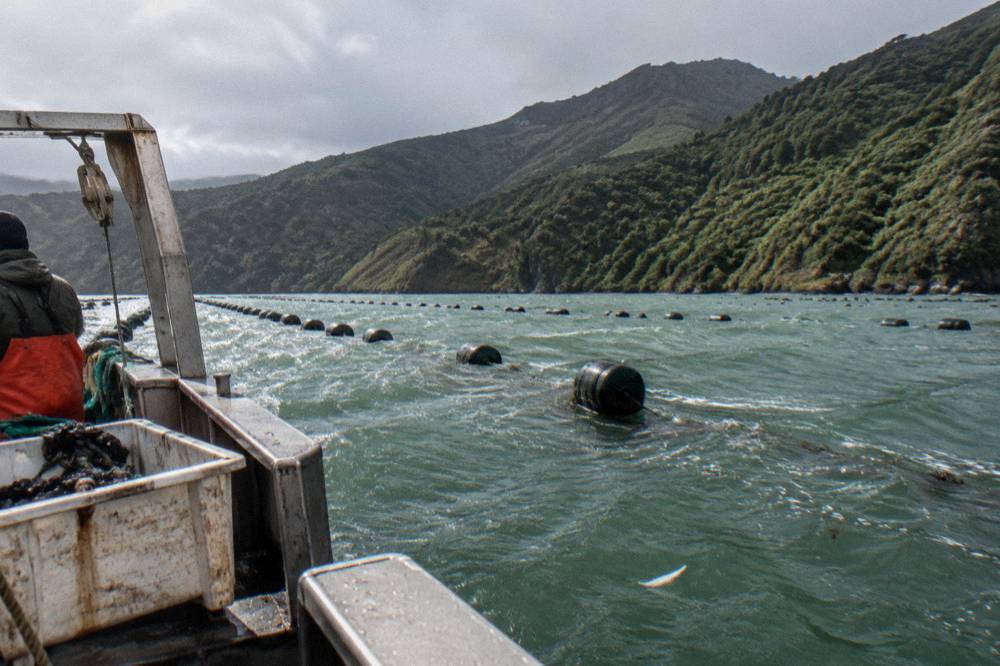
Where Can You Paddle Around Picton?
The realistic paddling range from Picton is the sheltered southwestern corner of Queen Charlotte Sound: the bays close to town, the water around Kaipupu Point, and, for guided or experienced paddlers, the coastline toward Ship Cove and Motuara Island, both reachable only by boat. DOC records Motuara as about 32 km from Picton, a distance that makes it a boat-assisted paddle rather than a day trip under your own power.
Kaipupu Point, the wildlife sanctuary directly across from the town waterfront, is the natural first paddle: close, sheltered, and home to the fur seals and birdlife that gather there. Motuara Island, the predator-free reserve where rats were eradicated in 1992 and saddleback, robin and yellow-crowned parakeet now breed, is a bigger prize. DOC's guidance for anyone landing is to check, clean and seal gear so you do not carry pests, soil or seeds ashore, and Marlborough NZ notes that dogs are not allowed on the island at all (DOC Motuara Island Scenic Reserve).
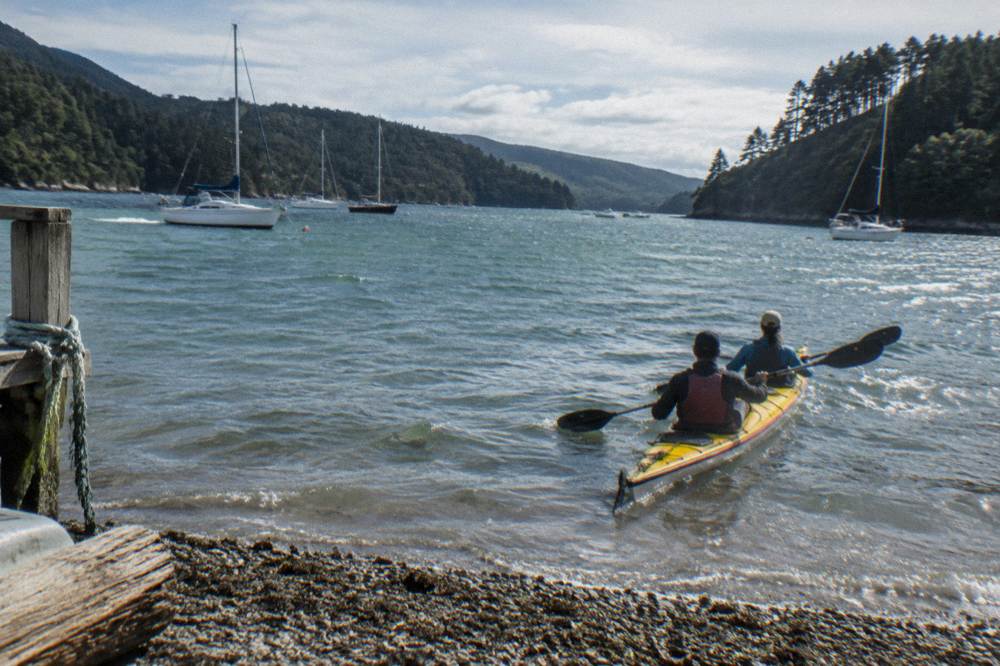
The kayak-to-hike crossover is the other quiet advantage of paddling from Picton. The Queen Charlotte Track begins at Ship Cove, 73.5 km from its finish at Anakiwa, and its first stage to Resolution Bay is a modest 4.5 km. Kayakers and walkers share the same boat shuttle infrastructure, and several operators move packs between accommodation stops along the track, so a paddle morning can be spliced into a walking itinerary without hiring a car. A fuller picture of that route is in the Queen Charlotte Track boat and walk guide.
For travellers weighing a paddle against a pure boat day, the comparison is not really kayaks versus boats but freedom versus reach. A kayak gets you into the margins, the sea caves, the shallows under the trees, at the pace of a slow walk. A boat gets you 30 km up the Sound and back with a commentary. The guided kayak and cruise combo from Picton, covered above, is built for exactly the traveller who refuses to choose. If a full morning on the water by motor appeals instead, the options covered in the Picton boat tours guide run from a 2 hour harbour cruise upward.
“Lovely day exploring the sounds, and seeing the native flora and fauna. The guided walk on Motuara island was great fun - gave us a good idea of what to look out for. The cruise dropped us at Ship Cove where we enjoyed our picnic and a hike and some snorkelling. All in all a day very well spent!”
Which Months Suit Which Kind Of Paddler?
A busy but fair summary runs like this: January to March gives the driest, warmest statistics and the fullest schedules; April to June trades rising rain for calm, quiet water; July to September is the wettest stretch and the least busy; October to December brings the strongest winds but lengthening days. None of these is a rule, because the record describes averages, not your Saturday. Match the month to your priorities rather than to a league table.
| Period | What the record shows | Who it suits |
|---|---|---|
| January to March | Driest stretch, February lowest at 65 mm and 4 wet days | First-time paddlers, families, anyone wanting warm air |
| April to June | Rain rising from 104 mm toward 145 mm | Paddlers chasing calm water and fewer boats |
| July to September | July peak of 207 mm and 14 wet days | Keen locals, boat-based travellers, fair-weather bookers |
| October to December | Windy stretch, rain easing from 140 mm to 98 mm | Experienced paddlers happy to pick their window |
The pattern that surprises most visitors is that the famous NZ summer is not the calmest time on the water. Wind data shows strong gusts peaking through spring and summer, while winter, for all its rain, has the fewest strong-wind days. That is the quiet logic behind operators describing autumn and winter water as glassy. Whether glassy and cold beats breezy and warm is a personal call, not a data point.
Booking behaviour follows the sun, not the statistics, so the practical edge of travelling outside January is availability rather than weather. Guided days and boat cruises from Picton run year round, with some reduced winter schedules, and the midsummer weeks fill first. If your dates are fixed by a school holiday or a cruise ship call, you take the weather you are given; the 24 hour free-cancellation terms on most Picton tours at least let you reshuffle if a front arrives.
What Should You Bring For A Picton Paddle At Any Time Of Year?
Layer for the water temperature rather than the calendar: a synthetic or merino base layer, a windproof shell, a hat and a dry bag for spare clothes will serve in any month, because the difference between a February and a July paddle in the Sounds is smaller than the difference between a calm morning and a breezy afternoon on the same day. Sun protection matters even in winter, since glare off the water doubles the exposure. Footwear you do not mind getting wet completes the kit.
The reasoning is arithmetic more than experience. Air temperatures in the Sounds are moderated by the water on all sides, so even summer mornings start cool and winter middays can feel mild. The Picton Mail Boat Cruises site covers clothing in more depth in its article on what to wear on a Marlborough Sounds cruise, and the same layering logic carries over to a kayak cockpit, where you sit closer to the water and cannot move to warm up.
“Very nice and informative crew. Food was great (green mussels and grilled salmon). Beautiful weather. Saw mussel farms and a pleasant cruise around the bay. Recommended for a nice outing.”
For the combined kayak and cruise day specifically, two extra items earn their place. The first is a packed approach to lunch: a food tasting is included but other food and drinks are excluded unless specified, so bring something substantial for an 8 hour day. The second is a dry layer for the afternoon, since you will spend it on an open deck after a morning of splashing, and the Sounds breeze on damp clothes is the day's one reliable discomfort.
Can You Kayak In NZ On A Short Visit Or From A Cruise Ship?
Yes, and Picton is one of the better places in the country to do it, because the sheltered water starts at the town waterfront rather than at the end of a drive. A cruise ship passenger with a full day in port can run a guided paddle in the morning and a boat cruise in the afternoon, while a visitor with only two or three hours ashore is better matched to a short harbour cruise. The constraint is port time, not ability.
The arithmetic for cruise ship visitors is tight but workable. Vessels berth at Waimahara Wharf in Shakespeare Bay or Waitohi Wharf in Picton Harbour, and Port Marlborough's schedule notes that posted arrival times are to the pilot station, so berthing runs roughly 3 hours later at Waimahara and 2.5 hours later at Waitohi (Port Marlborough cruise ship schedule). An 8 hour kayak and cruise day fits a long port call and not a short one; the planning detail is laid out in the Picton cruise ship shore excursion guide.
For visitors arriving on the ferry from Wellington, the same half-day logic applies with one warning: the daylight sailings dock too late for a morning paddle. Both Bluebridge and Interislander quote a 3.5 hour crossing, and mid-morning arrivals reach Picton after guided morning paddles have begun, though exact start times are not mentioned, so check the booking page. A kayak day from Wellington means either the overnight sailing or, far more pleasantly, a night in Picton first, a trade-off examined in the Wellington to Picton ferry and Sounds cruise guide.
The deeper point for short visits is that a kayak in the Sounds rewards local knowledge disproportionately. Conditions on the water change by the hour, and a guided product absorbs that risk for you. Independent hire suits confident paddlers with a weather app and a spare afternoon; everyone else gets better value, and better stories, from a guided morning.
So, which month? If warmth and the fullest schedules matter most, book January to March. If still water and empty bays matter more, take the gamble on April to June.
Common Questions About The Best Time To Kayak In NZ
What Is The Best Time Of Year To Kayak In NZ?
It depends on your priorities. Around Picton, the measured record shows February as the driest month at 65 mm of rain, and January to March as the warmest, most scheduled stretch, while operators report that autumn and winter can deliver the calmest water of the year. Pick summer for comfort, the shoulder seasons for stillness, and check dates and availability on the operator's booking page.
Is Winter Too Cold To Kayak In The Marlborough Sounds?
Not automatically. Winter is the wettest time in Picton, with July averaging 207 mm of rain, but wind, not rain, is what usually stops a paddle, and strong winds are actually least frequent in winter. Winter trips are not mentioned, so check the booking page and pack warm layers if you go. Fair-weather travellers should book with free cancellation and keep a boat cruise as a backup.
Can Beginners Kayak In The Marlborough Sounds?
Yes. The sheltered inner bays near the Picton waterfront are well protected from the wind that affects the outer Sounds, and the guided kayak and cruise day from Picton includes a guide, which removes the route-finding and weather-judgement problems that catch out first-timers. Group size is capped at 24 travellers.
What Should You Wear Kayaking In Picton?
Dress for the water, not the calendar: a quick-drying base layer, a windproof shell, a hat, and a dry bag with a spare layer. Glare off the water makes sun protection worth carrying even on cooler days, and footwear you can get wet is a must for launching from beaches and jetties.
Can You Combine Kayaking With A Boat Cruise In One Day?
Yes. The Picton Morning Guided Kayak with Afternoon Boat Cruise Tour runs 8 hours from the Picton waterfront, from $152.43 per person, with a guide, commentary and a food tasting included. It suits travellers with a full day in Picton, including cruise ship passengers on long port calls, and lists free cancellation up to 24 hours before.