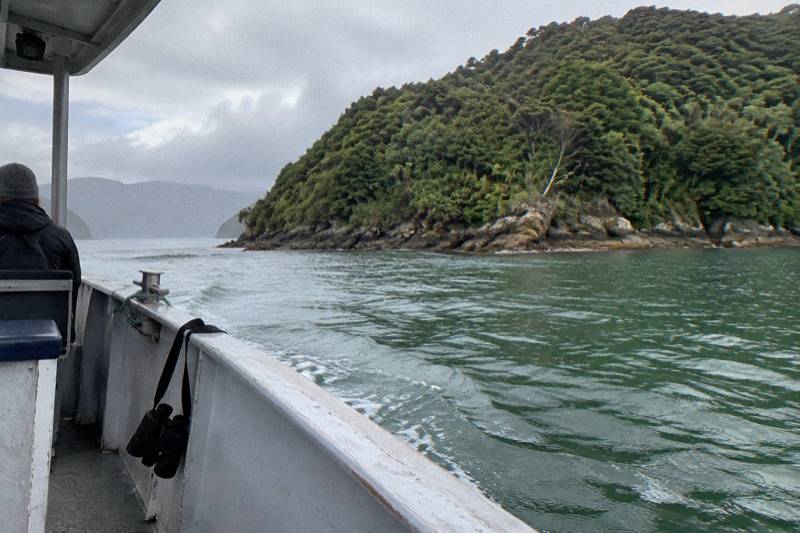
Marlborough Sounds Wildlife Cruise: Dolphins, Penguins And Seabirds
The Marlborough Sounds hold dusky, bottlenose, common and orca, rare Hector's dolphins, fur seals around Kaipupu, little blue penguins and one of the world's rarest shags. Not every boat from Picton goes looking for them, and the boats that do differ sharply in price, group size and what they promise.
Short answer
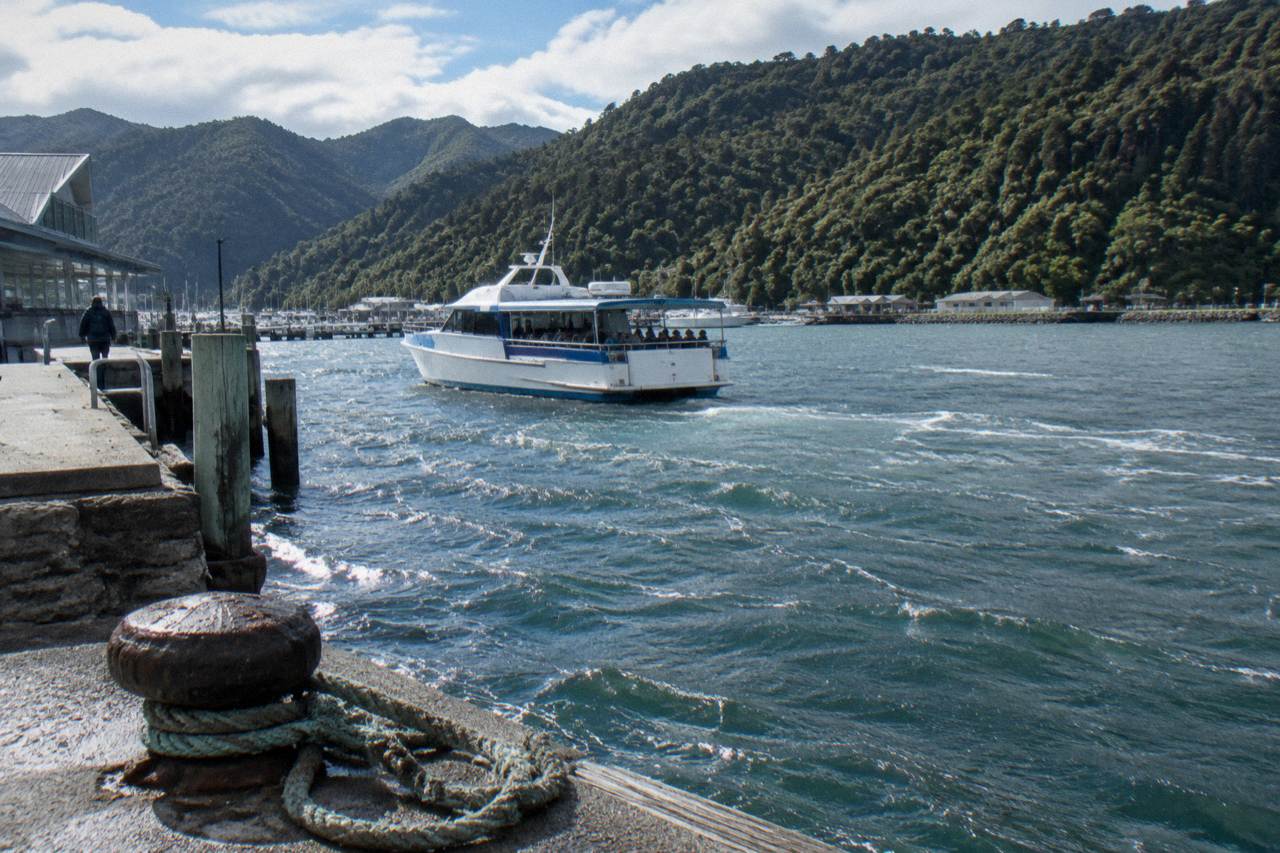
Wildlife-focused cruises from Picton run from $100.08 per person for the Motuara Wildlife Sanctuary Tour and Dolphin Cruise, 4.7 across 216 reviews, to $128.84 for the Blumine Island bird eco-tour, 4.8 across 56 reviews, and the swim-with-dolphins tour. Dolphins, seals, penguins and seabirds may be seen on any of them; no operator guarantees a sighting.
What Wildlife Can You See On A Marlborough Sounds Cruise From Picton?
The Sounds' dolphin species are dusky, bottlenose, common and orca, with rare Hector's dolphins; fur seals gather around Kaipupu Wildlife Sanctuary, little blue penguins and several shag species are resident, and one cruise lands on an island sanctuary holding about 200 South Island saddleback. Every sighting depends on the day, and no operator promises one.
That list comes from the regional tourism body and the operators themselves, and it is the honest frame for any wildlife cruise. Orcas come near shore from October to March, according to Marlborough NZ, which is the only seasonal pattern worth planning around. Hector's dolphins, the small round-finned species, are classed rare here. Humpback whales pass the edge of Cook Strait in winter and are rarely seen inside the Sounds.
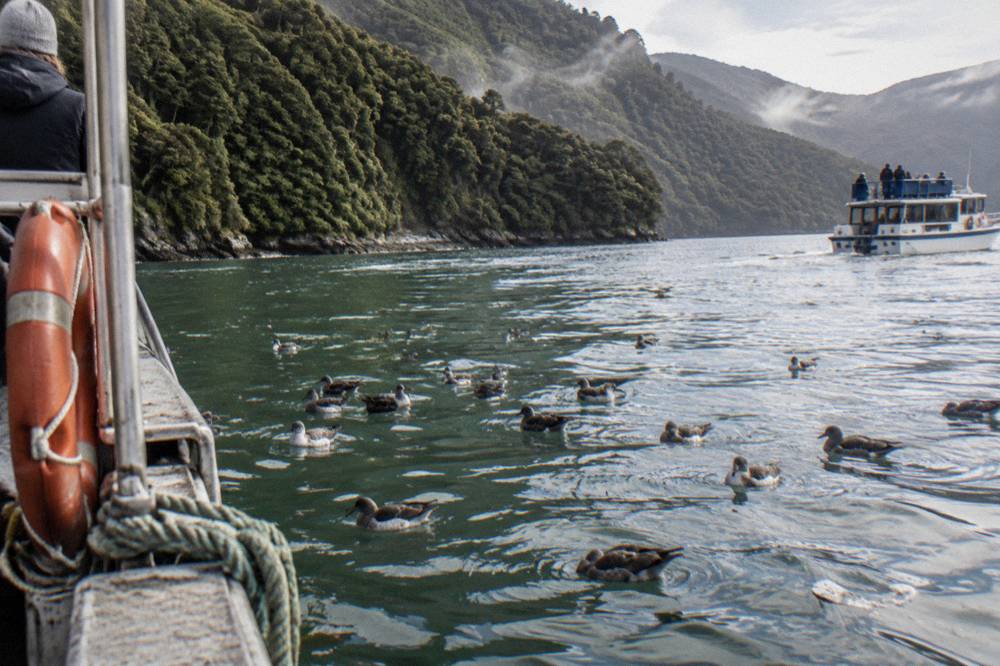
The bird life is a quieter draw and, for some travellers, the better one. Little blue penguins work the bays year round. White-fronted terns, fluttering shearwaters, spotted shags and pied shags are regular. The prize species is the king shag: Marlborough NZ puts the whole population at 500 to 600 birds, found only in the Marlborough Sounds, and asks boats to keep at least 100 m from nesting and roosting sites. Very few places in the world offer a chance at a bird with a global population that small.
On land-based sanctuary stops the bush birds take over: bellbirds, tui, kereru, fantails and, on Motuara Island, South Island robins and yellow-crowned parakeets.
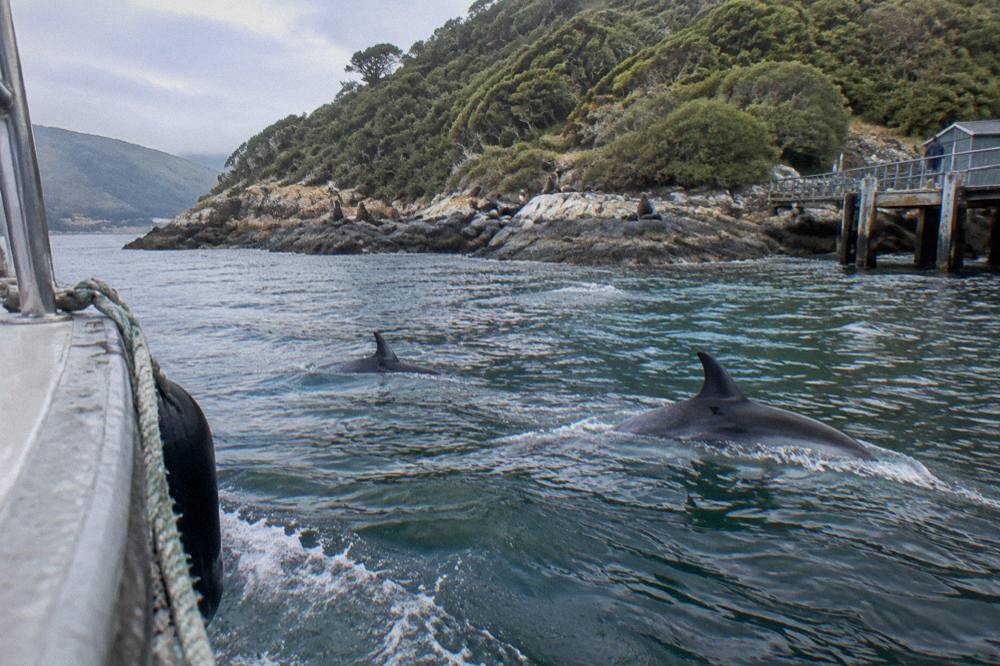
The practical point is that wildlife in the Sounds is abundant but mobile. A cruise marketed for dolphins can deliver a morning of seals and seabirds, and a general scenic cruise can stumble into a dolphin pod. Choose the boat for its route, group size and landing stops, treat the animals as the bonus they are, and read the cancellation terms before you book. More on that in the sections below, including the comparison of the wildlife-focused options and the rules that govern how close boats may go.
Which Wildlife Cruise Should You Choose From Picton?
Three Picton cruises put wildlife first: the Motuara Wildlife Sanctuary Tour and Dolphin Cruise from $100.08, 4.7 across 216 reviews; the Bird Watching and Dolphin Eco-Tour to Blumine Island from $128.84, 4.8 across 56 reviews; and the swim-with-wild-dolphins eco-tour from $128.84, 4.1 across 40 reviews. All three cap groups at 30 travellers, and two include a guide and commentary.
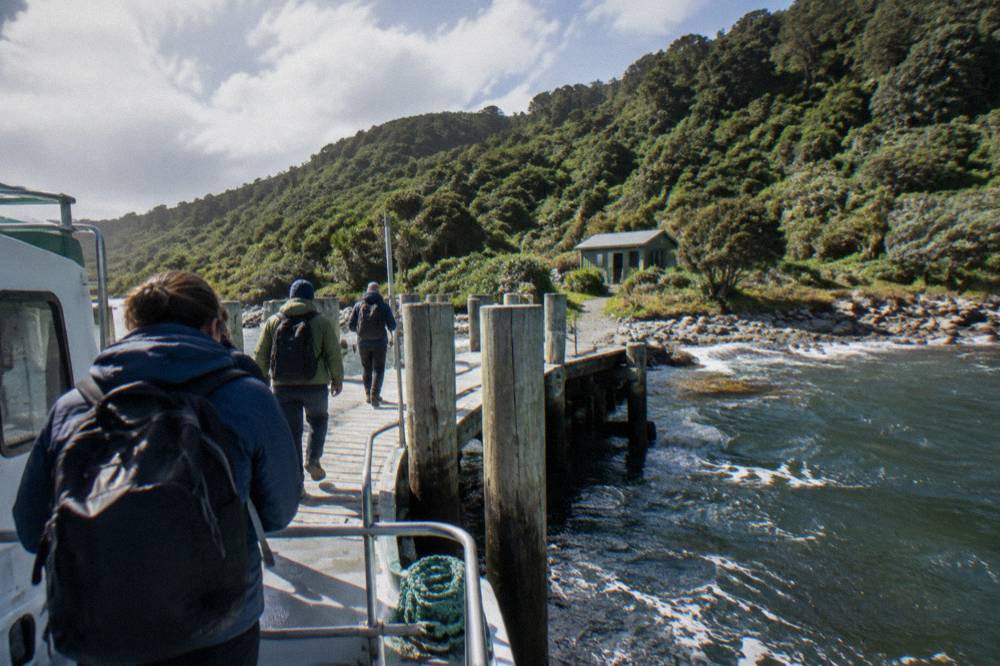
The trio earns its place differently. The Motuara tour is the all-rounder: four and a half hours, a landing on the island sanctuary with its nature walk, National Park fees in the ticket, drinks included, and free cancellation up to 24 hours before. It is also the most reviewed of the three, which makes its 4.7 the most solid number on the page. The meeting point is E-Ko Tours at 1 Wellington Street, a two minute walk from the Picton waterfront.
The Blumine Island eco-tour runs three to four hours and leans birdward. Blumine, like Motuara, is a predator-free bird sanctuary, and the tour's 4.8 rating across 56 reviews reflects a product built around bird watching; whether the boat lands on the island is not mentioned, so check the booking page. It carries the same 30-passenger cap, guide and park fees.
“Captain Andy and Hannah were a lovely crew - very accommodating for my 3 and 5 year olds. They especially loved taking a turn at the wheel and hot cocoa on the way back. Wonderful, local company worth supporting!”
The swim-with-dolphins tour is the specialist option and the one to read carefully. The cruise runs two to four hours depending on where the animals are, and there is no free-cancellation option: cancellation is allowed only for weather or minimum-number reasons under its stated policy. Its 4.1 across 40 reviews is respectable but the lowest of the three, which is typical of swim products, since an actual swim depends entirely on finding a suitable pod under the marine mammal rules.
| Cruise | Duration | From price | Rating | Reviews | Group cap | Landing |
|---|---|---|---|---|---|---|
| Motuara Wildlife Sanctuary Tour and Dolphin Cruise | 4 hours 30 minutes | $100.08 per person | 4.7 | 216 | 30 | Motuara Island |
| Bird Watching and Dolphin Eco-Tour to Blumine Island | 3 to 4 hours | $128.84 per person | 4.8 | 56 | 30 | Blumine Island |
| Swim with Wild Dolphins Small-Group Eco Tour | 2 to 4 hours | $128.84 per person | 4.1 | 40 | 30 | None stated |
| Captain Cook and Dolphin Cruise | 4 hours | $100.08 per person | 4.7 | 28 | 30 | None stated |
| Seafood Odyssea Marlborough Sounds Cruise | 3 hours | $86.28 per person | 4.7 | 136 | 100 | None stated |
Two neighbouring options widen the field. The Captain Cook and Dolphin Cruise, from the same E-Ko stable at 1 Wellington Street, costs the same $100.08 as the Motuara tour and runs four hours, though with 28 reviews it is a smaller pool to judge by. The Seafood Odyssea cruise from Town Wharf 6 adds a seafood tasting to a three-hour scenic run, 4.7 across 136 reviews, but it is a food cruise that may see wildlife rather than the reverse. Among per-person cruises with 15 or more reviews, the dearest wildlife-focused from-price here, $128.84, still sits well under the private charter end of the market.
For readers weighing the mail boat instead, the differences are structural: the mail runs deliver freight and mail first, and the route changes by day and is confirmed at check-in. Wildlife on those trips is whatever the Sounds offer that afternoon. The dedicated eco-tours, by contrast, choose their routing around what is in the water.
Where Do Wildlife Cruises From Picton Actually Go?
One of the three wildlife cruises lands on a pest-free island sanctuary in Queen Charlotte Sound: the Motuara tour lands on Motuara Island, opposite Ship Cove. Whether the Blumine eco-tour lands on Blumine Island is not mentioned, so check the booking page. The swim tour stays on the water, following dolphin reports across the Sound.
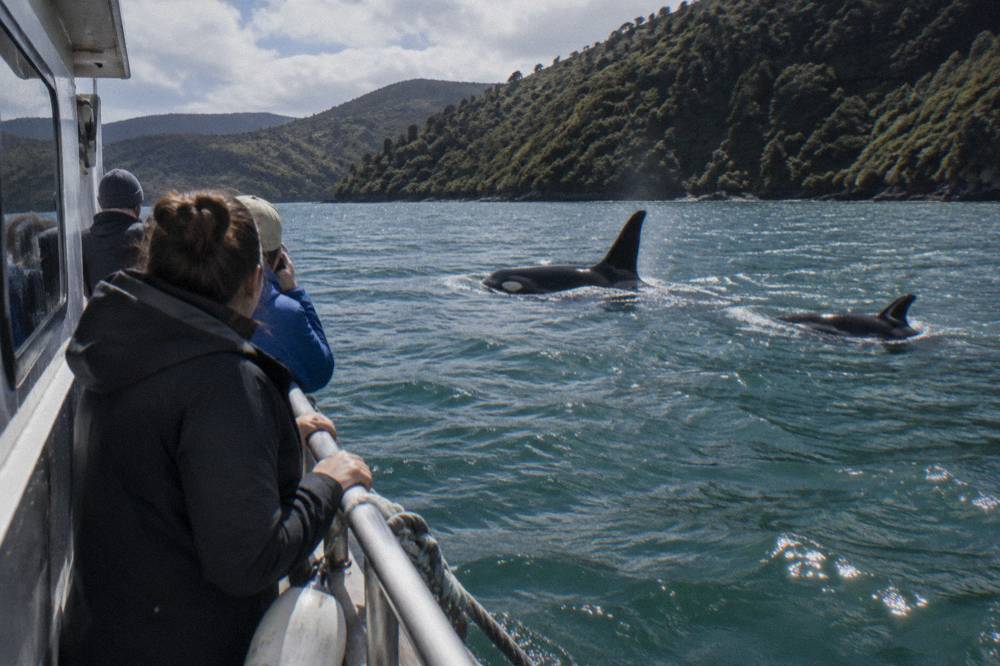
Motuara is the standout destination. The Department of Conservation eradicated rats there in 1992, and the island now carries about 200 South Island saddleback, South Island robins, yellow-crowned parakeets, bellbirds and a lookout at the top of the walking track. It also works as a creche for rowi kiwi, among the rarest kiwi in the country: eggs are hatched in captivity, chicks grow up on Motuara until they reach about 1 kg, then return to Okarito. There is history under the birds too; Captain Cook proclaimed British sovereignty over the South Island on Motuara in 1770. DOC asks all visitors to check, clean and seal gear against pests, and no dogs are allowed, per the DOC Motuara Island page. The tourism body's Motuara bird sanctuary guide adds the king shag figure and the 100 m keep-away rule for nesting sites.
Blumine Island, further out toward the Sound's mouth, offers a similar pest-free story on a quieter footing: forest, translocated birds, and a walking track with views back over the water. The eco-tour's three-to-four-hour window is built around that landing plus dolphin time en route.
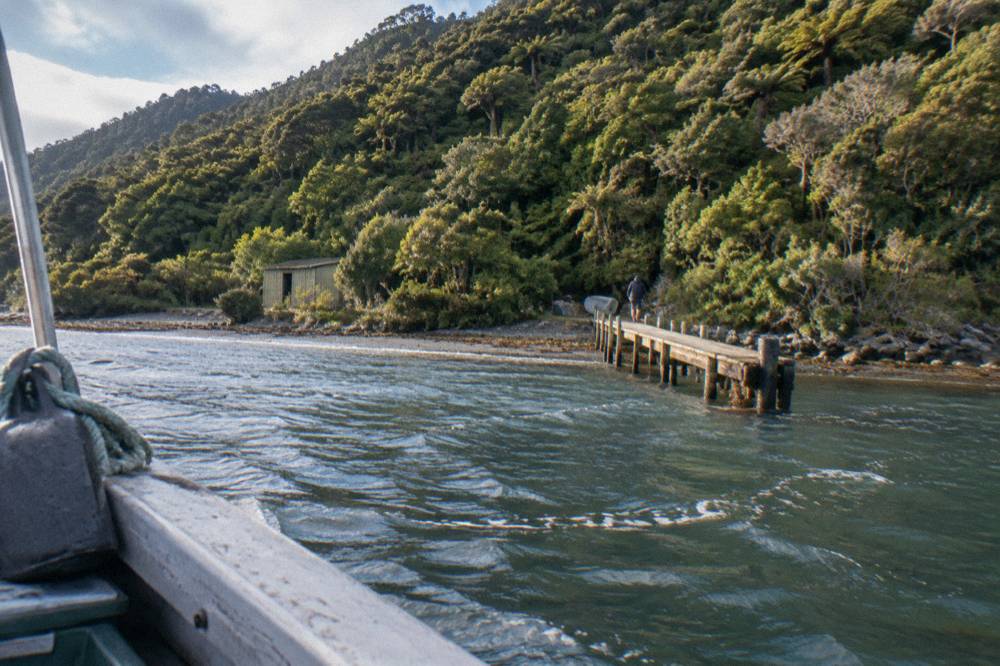
Both E-Ko landings include National Park fees in the ticket price, which saves a small desk transaction at the jetty.
Readers planning a full Sounds itinerary can combine a wildlife cruise with a Ship Cove stop or a track walk; the Ship Cove cruise guide and the Queen Charlotte Track boat and walk guide cover those combinations, and the wider Marlborough Sounds overview sets out how the pieces fit. The one combination to avoid assuming is the mail run plus a Motuara landing: the Picton mail boat does not call at Motuara or Ship Cove, those are separate cruises.
How Close Can Boats Get To Dolphins And Seals In The Sounds?
Department of Conservation rules require boats to travel no faster than idle speed within 300 m of any marine mammal, to keep at least 50 m from whales, to stay about 20 m from hauled-out seals, and to approach whales and dolphins only from behind and to the side. Swimming with dolphins is permitted except with pods containing very young calves, and swimming with whales is banned.
These rules come from the Marine Mammals Protection Regulations, summarised in DOC's public leaflet, and they shape every wildlife cruise more than any brochure does. They explain why a dolphin encounter lasts as long as the dolphins allow it: the boat cannot circle the pod, cut through the group or obstruct its path, and when leaving it must not exceed 10 knots within 300 m of dolphins. Boats must not make loud noises around mammals either.
| Rule | What it means on a cruise |
|---|---|
| Idle or no-wake speed within 300 m of any marine mammal | The approach is slow; sightings can end when the animals move off |
| At least 50 m from whales, 200 m from a mother and calf whale | Whale viewing is distant; whales are rare inside the Sounds anyway |
| About 20 m from seals and sea lions hauled out | Seal colonies are viewed from the water, not walked into |
| No swimming with dolphin pods with very young calves | Swim tours cannot enter the water with every pod they find |
| No swimming with whales | Applies to all operators, no exceptions |
The source is the DOC marine mammal regulations summary, worth reading in full before a swim tour. For the swim-with-dolphins product, the calf rule is the single biggest variable in whether a swim happens: the skipper can only put swimmers in with a relaxed, calf-free pod, and the weather and minimum-number cancellation policy exists because some days do not deliver.
For passengers on the viewing cruises, the rules cost little. Idle-speed approaches are quiet, and quiet boats get longer encounters. The king shag keep-away distance of 100 m from nesting and roosting sites, set by the tourism body for a bird with 500 to 600 individuals alive, matters mainly to private boaties; the commercial eco-tours observe it as standard practice.
What Is The Best Time Of Year For A Wildlife Cruise From Picton?
No month guarantees anything, but the patterns that exist are these: orcas come near shore from October to March, Picton's driest and most settled weather runs through February with 65 mm of rain, and operators themselves describe autumn and winter as sometimes producing glassy water and more marine life. Rainfall peaks in July at 207 mm.
The rainfall picture comes from NIWA's long-run Marlborough climate record: the Picton station averages 1463 mm a year, wettest in July at 207 mm and driest in February at 65 mm, with wet days of 1 mm or more ranging from four a month in February to fourteen in July. That matters for comfort rather than wildlife, since the Sounds are sheltered water and cruises run in light rain happily. What rain does affect is the view: the bush-clad hills are at their clearest after a dry spell.
| Month guide | Rainfall pattern | Wildlife note |
|---|---|---|
| October to March | Spring and summer, windiest season in the outer Sounds | The window when orcas come near shore |
| February | Driest month, 65 mm, fewest wet days | Peak visitor season; book ahead |
| April to June | Rain builds toward winter | Operators report calm, glassy conditions at times |
| July | Wettest month, 207 mm, about 14 wet days | Quietest queues; warm layers essential |
| August to September | Rain easing, 151 mm then 121 mm | Winter schedules apply to some services |
The counterintuitive tip, and the one a first page of search results rarely gives, is that winter should not be dismissed. The Pelorus operator's own FAQ says autumn and winter "can be some of the best of the year, with glassy calm water conditions and more marine life including dolphins", and the Picton mail run keeps sailing through winter, three days a week from May, on smaller vessels. Fewer boats on the water also means less pressure on the animals. The trade-offs are real: shorter days, cold spray, and no hot drinks on some winter services.
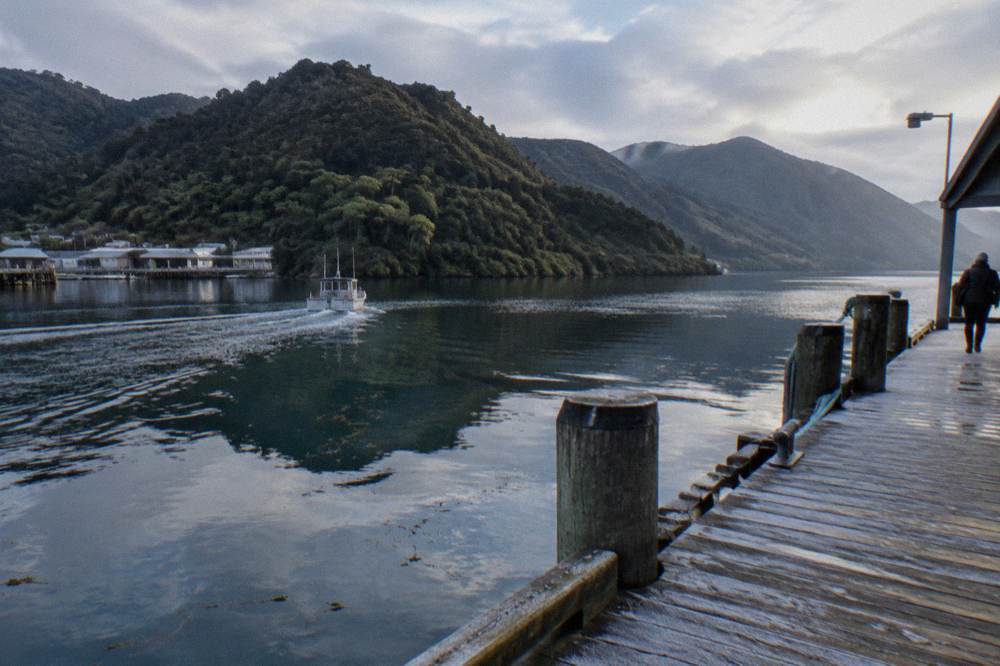
Timing within the day matters too, though no operator states a best hour. The wildlife cruises from Picton depart from the waterfront around London Quay and Wellington Street in the morning or early afternoon; the swim tour's flexible two-to-four-hour window suggests a skipper who will extend or shorten around what the Sound offers. Whatever the season, book the day with the most schedule slack in your trip, so a weather cancellation can become a next-day retry rather than a lost experience.
What Should You Bring And Know Before A Wildlife Cruise?
Bring warm layers and a waterproof jacket in any season, sun protection, a packed lunch or snacks since the inclusions of the three wildlife cruises do not mention a meal, and binoculars if you own them. Check the cancellation policy at booking: two of the three allow free cancellation up to 24 hours before, and the swim tour does not, allowing cancellation only for weather or minimum numbers.
Food is the detail that catches people out. The Blumine eco-tour includes light refreshments, though drinks are not mentioned, and the Motuara tour includes tea, coffee, hot chocolate and, on the PM departure, one complimentary glass of local wine, but no meal appears on any of the three tickets. Picton's cafes and supermarkets are a short walk from every meeting point, so packing lunch costs minutes. None of the three offers hotel pickup; every one starts from the waterfront, with E-Ko Tours at 1 Wellington Street the check-in for all of the E-Ko products.
| Item | Why | Any season? |
|---|---|---|
| Warm layers | Wind chill on the water, even in summer | Yes |
| Waterproof jacket | Spray and showers; Sounds weather turns fast | Yes |
| Sun protection | Reflected glare off the water | Yes, mainly October to March |
| Packed food | No meal included on the wildlife cruises | Yes |
| Sealed bags for food | DOC biosecurity on pest-free island landings | Required for Motuara and Blumine |
| Binoculars | King shags and distant dolphin pods | Optional |
The biosecurity point deserves emphasis because it is a condition of the island sanctuaries working. DOC asks every visitor to check, clean and seal gear, meaning packs, footwear, clothing and food in sealed containers, so that no seeds, soil or stowaway pests reach Motuara or Blumine. A lunch in a resealable container satisfies this; an open bag of loose crackers does not. Dogs are banned on both islands and on the Queen Charlotte Track.
Group size is the last planning lever. All three wildlife cruises keep their group sizes small, which is one reason their prices sit above the big scenic boats; exact caps are on the live booking page. For a reader who wants the same waters with a lower fare and can accept up to 70 or 99 fellow passengers, the half-day scenic cruise options are covered separately, and the dolphin cruise guide compares the dolphin-focused products in detail. This site, Picton Mail Boat Cruises, exists to sort exactly these trade-offs.
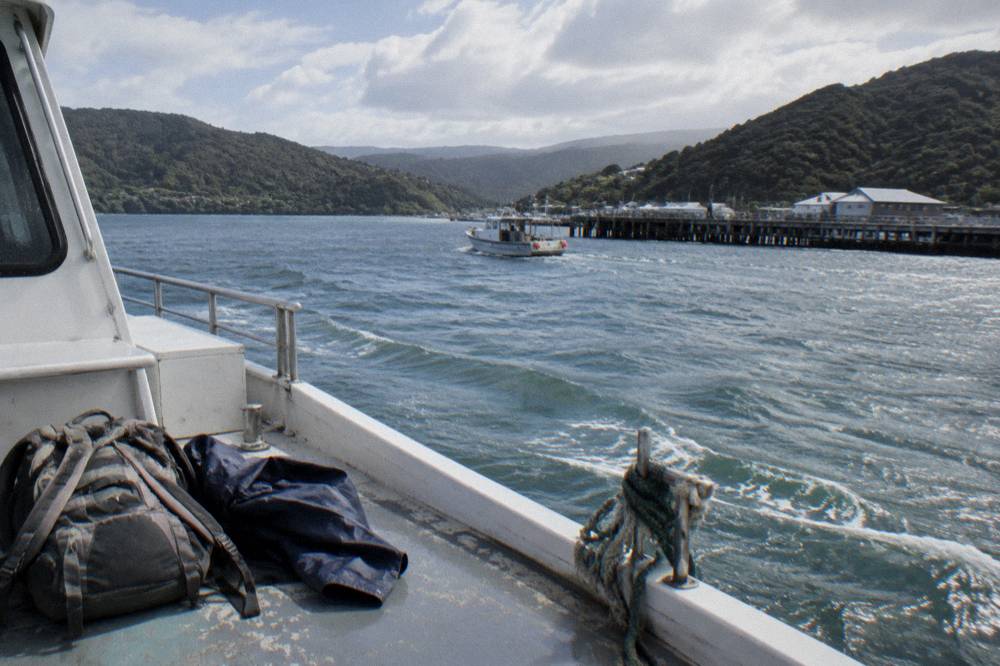
Read the cancellation terms alongside the stars and the decision usually makes itself.
How Does A Wildlife Cruise Compare With The Mail Boat And Scenic Options?
A wildlife cruise costs more per hour than the general scenic boats and less per hour than a private charter, and it buys three things the others do not: a 30-passenger cap, a guide whose routing follows the animals, and, on two of the three, a landing on a pest-free island. The Picton mail boat delivers a working service and whatever wildlife appears; it never lands at Motuara or Ship Cove.
The price ladder is easiest to read against real figures. Among the per-person cruises covered here with 15 or more reviews, the lowest from-price of all is the 2-hour shore excursion at $59.00 from 71 reviews, a short scenic loop rather than a wildlife product. At the far end, a private yacht charter costs $5,464.30 per group for up to 15 people, a different purchase entirely.
| Option type | From price | Group size | Wildlife focus | Landing |
|---|---|---|---|---|
| Wildlife eco-tour (Motuara or Blumine) | $100.08 to $128.84 | 30 | Primary | Island sanctuary |
| Swim with dolphins | $128.84 | 30 | Primary, conditional | None |
| Scenic half-day cruise | $69.02 | Up to 70 | Incidental | None |
| Mail boat cruise from Picton | $91.00 | Not stated | Incidental | Short stop if time allows |
| Private yacht charter | $5,464.30 per group, up to 15 | Private | Your itinerary | Flexible |
The mail boat deserves its own word because the names confuse people. The Queen Charlotte Sound Mail Boat Cruise from Picton is the most reviewed cruise of all covered here, 4.7 across 611 reviews, from $91.00 per person for four hours. It is a genuine New Zealand Post rural delivery run: the skipper delivers mail, freight and supplies to jetties without road access, gives commentary, and if time allows makes a short stop at one location, with the route confirmed at check-in. Fur seals and visiting dolphins may be seen. It is a superb half day, but a reader booking it for a Motuara landing or a dolphin swim will be disappointed, because it does neither.
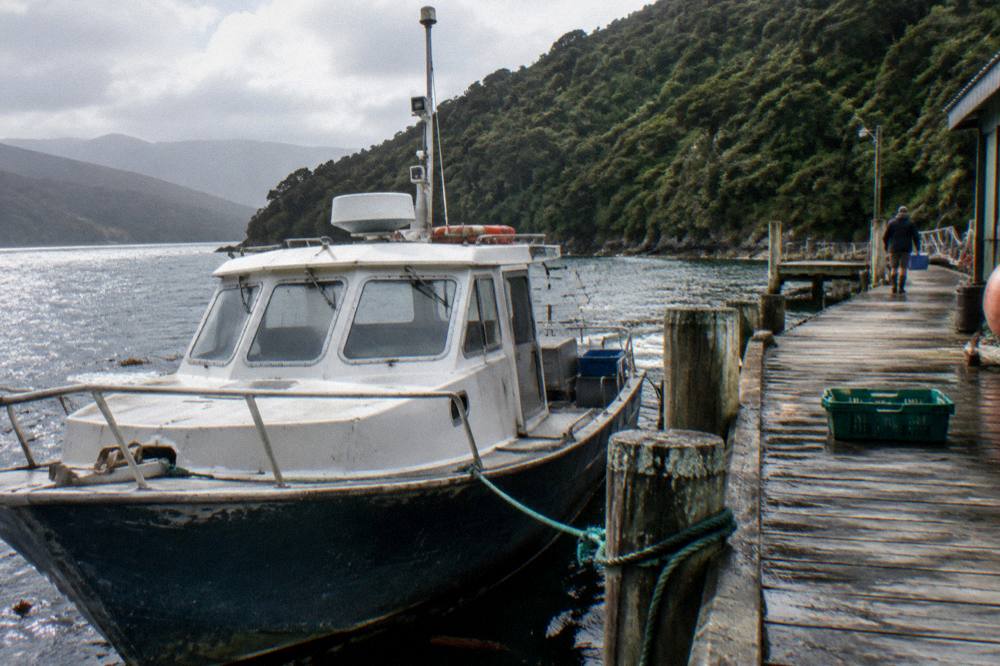
Between the wildlife tours and the mail boat sit the scenic cruises and the seafood tasting run, all capable of passing dolphins, none committed to finding them. The cleanest summary: choose the eco-tour family when the animals are the point and a 30-person boat suits you; choose the mail boat for the working-Sounds story; choose a scenic cruise for the cheapest comfortable hour or three on the water.
What Rules Do Boats Follow Around Marine Mammals?
Boats in the Sounds follow the Marine Mammals Protection Regulations 1992. Within 300 m of any marine mammal they hold idle or no-wake speed, approach whales and dolphins from behind and to the side, stay at least 50 m from whales and 20 m from hauled-out seals, and never swim with whales or with dolphin pods that have very young calves.
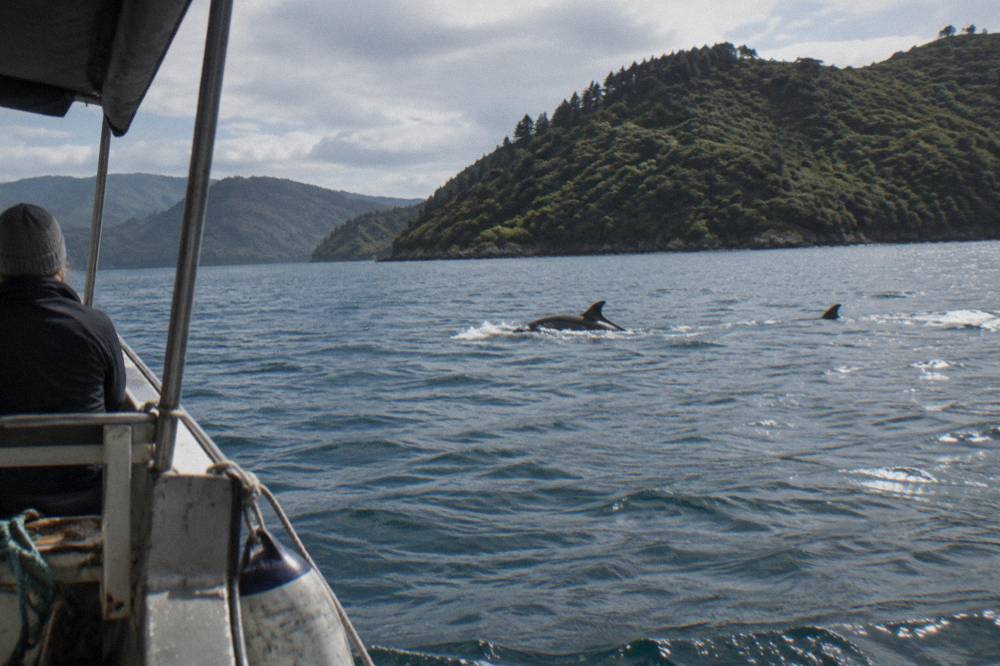
On the water you notice the throttle first. The skipper eases back to idle or no-wake speed while the animals are still far off, because the 300 m zone around every marine mammal is where slow speeds apply. The boat then holds a line behind and to the side of a pod rather than swinging in front of it. Circling, cutting through the middle or blocking a group's path are out, so when dolphins ride the bow wave, that is their choice, not something a driver can force.
The rules shape the way home, too. Leaving dolphins, a boat keeps to 10 knots or less until it passes 300 m clear, which is why the run back after a good encounter can feel oddly gentle. Loud noise is off the menu near animals. Shouting or slapping the hull to pull attention feels harmless but works against the rules, so keep your voice down.
Your kit earns its keep here. The Motuara tour hands out free binoculars and species ID cards, the right tools when the best behaviour plays out beyond the rail. You see more. The animals carry on undisturbed.
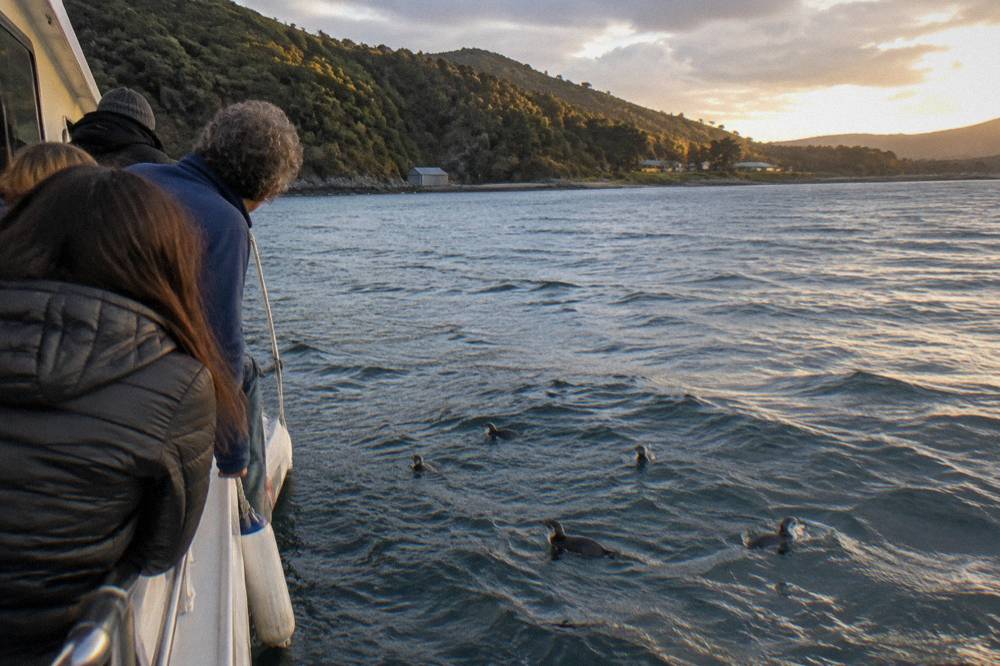
Swimming draws its own lines. The rules permit swimming with seals and dolphins, ban it with whales, and rule it out for pods with very young calves, so a crew reads the pod before anyone slips over the side. The swim-with-dolphins eco tour, open to travellers aged 12 and over with children accompanied by an adult, can turn into spectator time on deck. That is the system working, not the trip failing.
None of this spoils a day out. It means every close pass is a choice the animals made themselves, and that is the better story to take home anyway.
Common Questions About A Marlborough Sounds Wildlife Cruise
What Wildlife Can You See On A Marlborough Sounds Cruise From Picton?
Dusky, bottlenose, common and orca dolphins, with rare Hector's dolphins; New Zealand fur seals around Kaipupu; little blue penguins, terns, shearwaters and shags; and on island landings, saddleback, robin and yellow-crowned parakeet. Orcas come near shore from October to March. All sightings are may-see, never guaranteed.
Which Picton Wildlife Cruise Is Best For Dolphins?
The Motuara Wildlife Sanctuary Tour and Dolphin Cruise, from $100.08 per person, 4.7 across 216 reviews, combines dolphin cruising with an island landing. The swim-with-dolphins eco-tour, from $128.84, is the only one that puts you in the water, but swimming depends on finding a pod without very young calves, and it carries no free-cancellation line.
Do Any Wildlife Cruises Land On An Island?
Yes. The Motuara tour lands on Motuara Island, a pest-free sanctuary about 32 km from Picton with about 200 South Island saddleback; whether the Blumine eco-tour lands on Blumine Island is not mentioned, so check the booking page. Both include National Park fees and cap groups at 30. Visitors must check, clean and seal gear, and no dogs are allowed.
How Close Do Boats Get To Dolphins And Seals?
Boats travel no faster than idle speed within 300 m of any marine mammal, approach whales and dolphins from behind and to the side, keep at least 50 m from whales and about 20 m from hauled-out seals, and stay 100 m from king shag nesting sites. Swimming with whales is banned, and dolphin pods with very young calves cannot be swum with.
When Is The Best Time Of Year For A Wildlife Cruise In The Sounds?
Orcas come near shore from October to March. February is Picton's driest month at 65 mm of rain; July is wettest at 207 mm. The Pelorus operator describes autumn and winter as sometimes producing calm, glassy water and more marine life, so low-season trips should not be ruled out.
Is A Wildlife Cruise Worth It Compared With The Mail Boat?
They are different products. The mail boat, from $91.00 and 4.7 across 611 reviews, is a working delivery run with incidental wildlife and no Motuara or Ship Cove landing. The wildlife eco-tours, $100.08 to $128.84, cap groups at 30, follow the animals, and land on pest-free islands. Pick the eco-tour if wildlife is the priority.